Find costly design issues before they reach
the shop floor.
Plumb adds a systematic QA layer to your existing review process, checking every sheet against 14 fabrication and engineering criteria before issues become costly problems in production. Back within 24 hours. Starting at $1.50 per sheet.
Plumb is a systematic documentation QA pass — not engineering, and not exhaustive. No review process catches every issue; final responsibility rests with your team and your Engineer of Record.
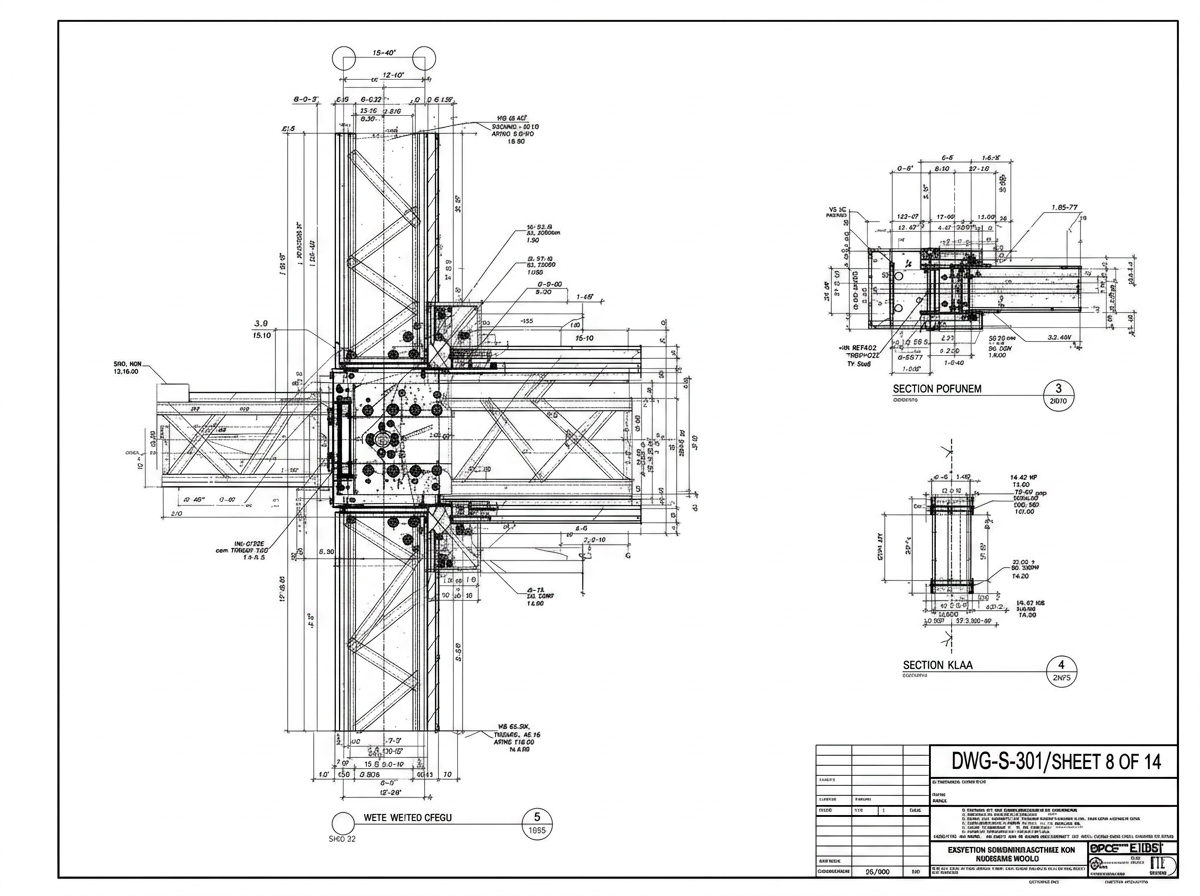
Built for the shop floor.
Plumb adds a systematic QA pass to your shop drawings before they leave the building — so costly issues get caught before they reach fabrication.
Fabrication shops
Add a systematic QA pass to your shop drawings before they leave the building. Plumb flags the weld, dimension, finish, and connection issues that get expensive once they reach the floor.
How it worksEngineering coordinators
Give your coordination team a first-pass review that catches missing dimensions, conflicts, and incomplete details — so senior engineers spend their time on judgment, not clerical checks.
See review categoriesThe kind of thing Plumb catches.
Representative examples of the findings a review returns — the sort of issue that costs real money once it reaches the floor. For an actual review, with the fabricator’s permission, see the published sample.
“Weld size missing on B/8 — would have stopped welder at fit-up.”
“Veneer direction not specified on three reception desk panels — would have triggered re-veneer.”
The errors are predictable. The cost isn't.
Every fabrication shop has the same conversation. A package goes through detailing, gets approved, hits the floor — and then the foreman sees it. A weld size missing on Sheet 8. A finish callout that contradicts the general note three sheets back. A dimension chain that doesn't close.
None of these errors should have made it to the shop. Each costs money. The worst part: they're predictable. The same categories of errors show up again and again because nobody has the time to systematically check every sheet against every criterion before fabrication starts.
| Error | Typical cost | What drives it |
|---|---|---|
Field RFI on a missed dimension | $500–$2,000 | Delays + engineer time + rework setup |
Re-cutting a wrong material allocation | $1,500–$8,000 | Scrap + reprocessing + missed sequence |
Wrong finish caught at install | $3,000–$25,000 | Rework, recoat, ship-back, schedule slip |
Missed PE-required item at permit | $5,000–$50,000+ | Permit hold, redesign, owner penalty |
Connection error at field-fit | $10,000–$100,000+ | Demobilize, re-fab, crane time |
The problem isn’t that people don’t review drawings. It’s that human review is difficult to execute with the same level of consistency across every sheet, every criterion, every package, every time — time pressure makes it hard to check every sheet against every criterion before fabrication starts. Plumb adds systematic coverage to the existing process.
Industry rule of thumb: rework on the floor costs 5–10× what catching the same error would have cost in the office. In the field, 10–50×.
Upload a PDF. Get back two files that drop into your workflow.
You upload
Drag your drawing PDF. Tell us tier and trade. ~2 minutes.
Plumb reviews
Every sheet, every category. Findings graded by severity. PE-required items isolated.
You receive
Marked-up PDF + Excel comments file, on your dashboard within 24 hours. We email you the moment it lands.
14 categories. Every sheet. Every package.
The criteria a senior reviewer would apply with a red pen — applied faster, more consistently, across every sheet.
Dimensional completeness
Every part dimensioned, chains close, tolerances stated.
Weld and joint definition
Weld size, type, length, finish, all-around vs intermittent.
Material specification
Grade, thickness, alloy, mill source, ASTM compliance.
Finish and coating callouts
Surface prep, primer, topcoat, dry film thickness, color.
Cross-sheet consistency
General notes vs detail notes vs schedules.
Bill of materials accuracy
Quantities match drawings, items numbered, no orphans.
Connection design clarity
Bolt type, grade, hole pattern, edge distance, slip-critical.
Fabrication sequence
Sub-assemblies defined, weldment hierarchy clear.
Shipping and handling
Pick points, weights, max dimensions, splice locations.
Field installation
Erection sequence, temporary bracing, anchor coordination.
Spec and reference standards
Specs cited correctly, edition years, addenda.
Drawing legibility
Text size, line weights, conflicting notes, OCR accuracy.
Scope boundary
By-others items called out, owner-furnished material flagged.
Engineering review flags
Items requiring PE judgment isolated for licensed review.
↳ CUSTOM CATEGORIES AVAILABLE ON ENTERPRISE PLANS
Three tiers. Pick the depth your package needs.
Drawing & Fabrication QA
Systematic review for common drawing, documentation, coordination, and fabrication issues.
All trades, all packages
Engineering & Submittal Readiness
Includes Tier 1 plus engineering readiness and submittal completeness against the applicable jurisdictional profile.
Permit-bound work · Engineering submittals · Submittal reviewers
Specification Compliance
Includes Tier 2 plus systematic comparison against applicable project specifications.
Spec-driven contracts
Built for the way fabrication shops actually work.
Structural Steel
Beams, columns, connections, weldments.
- ·Weld callout completeness (AWS D1.1 symbol set)
- ·Slip-critical bolt connection detail
- ·Member size vs schedule consistency
- ·AISC standard references and edition years
- ·Splice details and field-weld locations
Architectural & Ornamental Metals
Aluminum, stainless, decorative.
- ·Finish system completeness (anodize spec, mill finish vs polished)
- ·Fastener schedule and head-style callouts
- ·Expansion joints in long aluminum runs
- ·Dissimilar-metal isolation between fasteners and substrate
- ·Anchor coordination with adjacent trades
Millwork & Carpentry
Custom casework, joinery, finish carpentry.
- ·Edge banding callouts and PVC vs wood-veneer specs
- ·Hardware schedule completeness
- ·Panel-grain direction notes
- ·AWI/QCP compliance flags by section
- ·Finish schedule consistency (sheen, stain, grade)
Fiberglass & Composites
FRP, GFRC, mold-built parts.
- ·Laminate schedule completeness (ply count, fabric, resin)
- ·Mold release callouts and parting-line locations
- ·Gel coat color and finish consistency across pieces
- ·GFRC mix design references
- ·Embed plate locations and connection details
Themed Entertainment / Scenic
Theme park, attraction, exhibit fab.
- ·Client-spec compliance flags (Tier 3)
- ·Theme finish callouts and sample references
- ·Hidden fastener requirements
- ·Weight load callouts for ride coordination
- ·Client spec library check (Disney, Universal, federal, institutional)
Carved Rockwork & Scenic Paint
Sculpted rockwork, hardcoat, scenic finish callouts.
- ·Carve depth and texture callouts
- ·Scenic paint schedule and topcoat
- ·UV/durability spec vs interior/exterior
- ·Wash, dry-brush, and detail finish layers
↳ MIXED-TRADE PACKAGES SUPPORTED
The earlier you find it, the less it costs.
Drawing issues are cheaper to fix before material is ordered, parts are cut, or fabrication begins. Plumb adds another QA pass before those costs start accumulating. Starting at $1.50 per sheet, Plumb systematically checks every sheet against 14 QA categories, giving your team another opportunity to find costly problems before they reach production.
| Consideration | Traditional review | With Plumb |
|---|---|---|
| Review approach | Manual review based on available time and resources | Systematic QA pass across every sheet |
| Coverage | Can vary by reviewer, package and deadline | Drawing and engineering issues across 14 QA categories |
| Timing | Competes with existing workload | Completed before final release |
| Findings | Identified and communicated manually | Flagged, prioritised and organised for team review |
| Human judgment | Required | Required — your team makes the final decisions |
| Cost | Internal reviewer time | Starting at $1.50 per sheet |
Flag it before it costs you.
The goal isn’t to replace your reviewers. It’s to give them another chance to find an issue before the shop does. It doesn’t take many avoided RFIs, re-cuts, material orders or rework events for systematic QA to pay for itself.
A better QA layer for every package.
Built by people who know fabrication
Built around real fabrication workflows by people with decades of experience across design-build, engineering coordination and shop fabrication.
Systematic by design
Every package gets the same structured QA process. Same categories. Same criteria. Every sheet.
Fast enough to use before release
Reviews come back within 24 hours, which makes Plumb practical as a final QA layer before release.
Learn from recurring issues
Plumb helps your team recognise recurring categories of findings across packages, so you can improve your QA process upstream rather than only fixing symptoms sheet by sheet.
Works with your team, not instead of it
Plumb surfaces potential issues. Your team makes the decisions. Engineering judgment stays with your licensed professionals.
How Plumb compares to the alternatives.
- Cost *
- $72–$1,800
- Turnaround
- When time allows
- Consistency
- Variable
- Drag
- Pulled from running the shop
- Cost *
- $90–$2,400
- Turnaround
- When time allows
- Consistency
- Variable
- Drag
- Pulled from winning new work
- Cost *
- $135–$3,300
- Turnaround
- When time allows
- Consistency
- High but expensive
- Drag
- Pulled from running the business
- Cost *
- $200–$5,000
- Turnaround
- 3–10 business days
- Consistency
- Variable
- Drag
- Zero impact
- Cost *
- $0
- Turnaround
- —
- Consistency
- —
- Drag
- Errors hit the floor at full cost
- Cost *
- $25–$2,000
- Turnaround
- Within 24 hours
- Consistency
- Same criteria each package
- Drag
- Zero impact
* Cost ranges shown per package, based on typical 5–50 sheet packages and loaded hourly rates of $90–$200 for the relevant role. Comparison is illustrative and not a guarantee of results. Plumb provides a consistent first pass; it does not replace your team’s review or your Engineer of Record.
Two files. Drop them straight into your existing workflow.
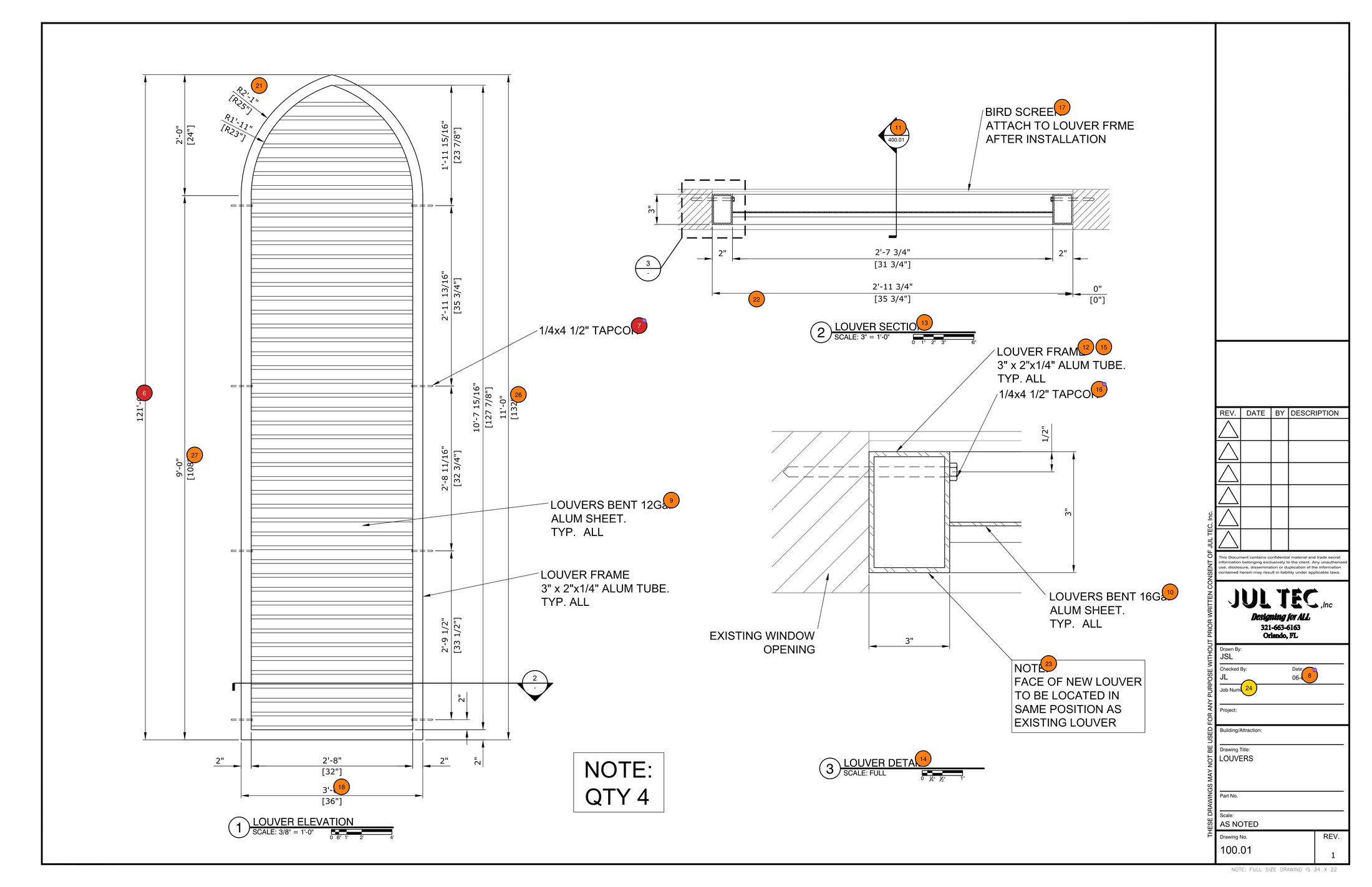
- • Bubble comments at every finding, color-coded by severity
- • PE-Review-Required findings marked with a [PE] badge
- • Trailing pages: summary stats, comment table, per-finding detail
- • Summary tab + Comments tab, one row per finding
- • Severity-color cells, frozen header, AutoFilter pre-applied
- + A systematic QA layer for design
- + Built by people with over 50 years of combined design-build, shop fabrication and engineering coordination experience
- + Experienced-reviewer criteria, applied systematically — the criteria an experienced reviewer would apply with a red pen, faster and more consistently
- + A repeatable QA pass across every sheet
- − A replacement for engineers, detailers, or internal reviewers
- − A code-compliance certification — we flag known code issues we spot, but we don't certify code compliance
- − A substitute for your PE or Engineer of Record
- − A drawing stamp or certification
Anything requiring engineering judgment is explicitly flagged as PE-Review-Required and isolated for review by your licensed design professional. That boundary is by design.
Consistency is the point.
No review process catches everything. Plumb’s advantage is systematic coverage: every sheet receives the same structured QA pass against the same criteria, every time. Your team gets another set of eyes without adding another manual review cycle.
Questions shops ask before their first package.
01How accurate is the review?+
Plumb applies the same 14-category checklist to every sheet, every package. Consistency is the main accuracy gain over human spot-checks — where fatigue, time pressure, and the reviewer's familiarity with the project all create gaps that vary package to package.
We do not claim 100% capture, and we won't. No review process — human, automated, or both — catches every error in every drawing. Anyone claiming otherwise is overselling. What Plumb commits to is this:
- ·Every sheet gets a complete pass against all 14 categories.
- ·The same criteria get applied the same way, every time, regardless of package size or time of day.
- ·Findings are graded by severity so your team can triage instead of re-reviewing.
- ·Items requiring engineering judgment are isolated and flagged [PE] rather than guessed at.
What Plumb will not catch: errors that depend on tribal knowledge of your shop's specific practices, errors that require engineering calculations to identify, and errors in information that isn't present on the drawing itself. Those remain the responsibility of your team and your Engineer of Record.
The Anytime Review money-back guarantee exists for this reason. Send us a package you've already reviewed internally, compare what we found against what your team caught, and decide from there. If that first review isn't useful, email us within 14 days of purchase and we'll refund the package in full — one per customer.
02What if Plumb misses something?+
Plumb is a documentation review service, not engineering. The Engineer of Record remains responsible for structural and code adequacy. See our Terms for full disclaimer.
03Do you stamp drawings or provide engineering sign-off?+
No. Plumb is a documentation review, not engineering. We do not stamp drawings, issue structural opinions, or make code-compliance determinations. Findings that require engineering judgment are flagged [PE] and referred to your engineer rather than answered.
04Do you train AI on our drawings?+
No. Drawings are processed through Anthropic's API, which does not train on API data per Anthropic's API terms. Source PDFs are deleted 30 days after upload and finished deliverables 90 days after delivery. A mutual NDA is available before you send anything confidential.
05What file formats do you accept?+
PDF only, for now. Most CAD packages (Tekla, SolidWorks, AutoCAD, Revit, Inventor) export to PDF directly. Multi-sheet PDFs are fine.
06What counts as one "sheet"?+
One page in the submitted PDF. A 47-page PDF is 47 sheets, regardless of drawing size.
07What about my NDA / confidential drawings?+
Drawings are processed through Anthropic's API (no training on your data, per Anthropic's API terms) and stored on Supabase. Source files are deleted 30 days after upload. NDAs are available for Studio and Enterprise plans. Government-classified work is not supported.
08How fast is turnaround?+
Back within 24 hours. Very large or complex packages can take longer. Anytime Review orders carry a 14-day money-back guarantee if you want to validate timing on your own drawings first.
09Can I dispute a finding?+
Yes. Flag the finding right in the online viewer, or reply to the review-ready email with the finding number and your reasoning. We'll review and reissue the deliverable if appropriate. Disputed findings inform our prompt and library improvements.
10Does it work with shop drawings exported from Tekla / SolidWorks / AutoCAD?+
Yes — Plumb reviews the PDF output, not the source CAD file, so the originating package doesn't matter as long as the PDF is text-searchable or high-resolution scanned.
11What if my drawings are hand sketches?+
Plumb works best on production shop drawings. Hand sketches may produce lower-quality findings due to OCR limits. Try one Anytime Review package to see if your sketch quality is sufficient.
12Can I switch tiers mid-month?+
Yes. Upgrades take effect immediately; downgrades take effect at the next billing period. Email hello@plumbreview.com to switch.
Still have questions? hello@plumbreview.com →
Ready to see what we'd find in your drawings?
Send us a drawing package and put Plumb alongside your existing review process. See what it flags. Compare the findings with your team's review. Decide for yourself whether another QA layer is worth having. No sales call.
Start your free month — up to 50 sheets, free. Card required, and you can cancel from your dashboard in one click. After 30 days or 50 sheets, whichever comes first, the plan you picked begins.
50 sheets free · back within 24 hours · cancel anytime